Some research-use-only peptide lots demonstrate such high analytical quality that distinguishing them from compounding-pharmacy peptides can be extremely difficult—or impossible.
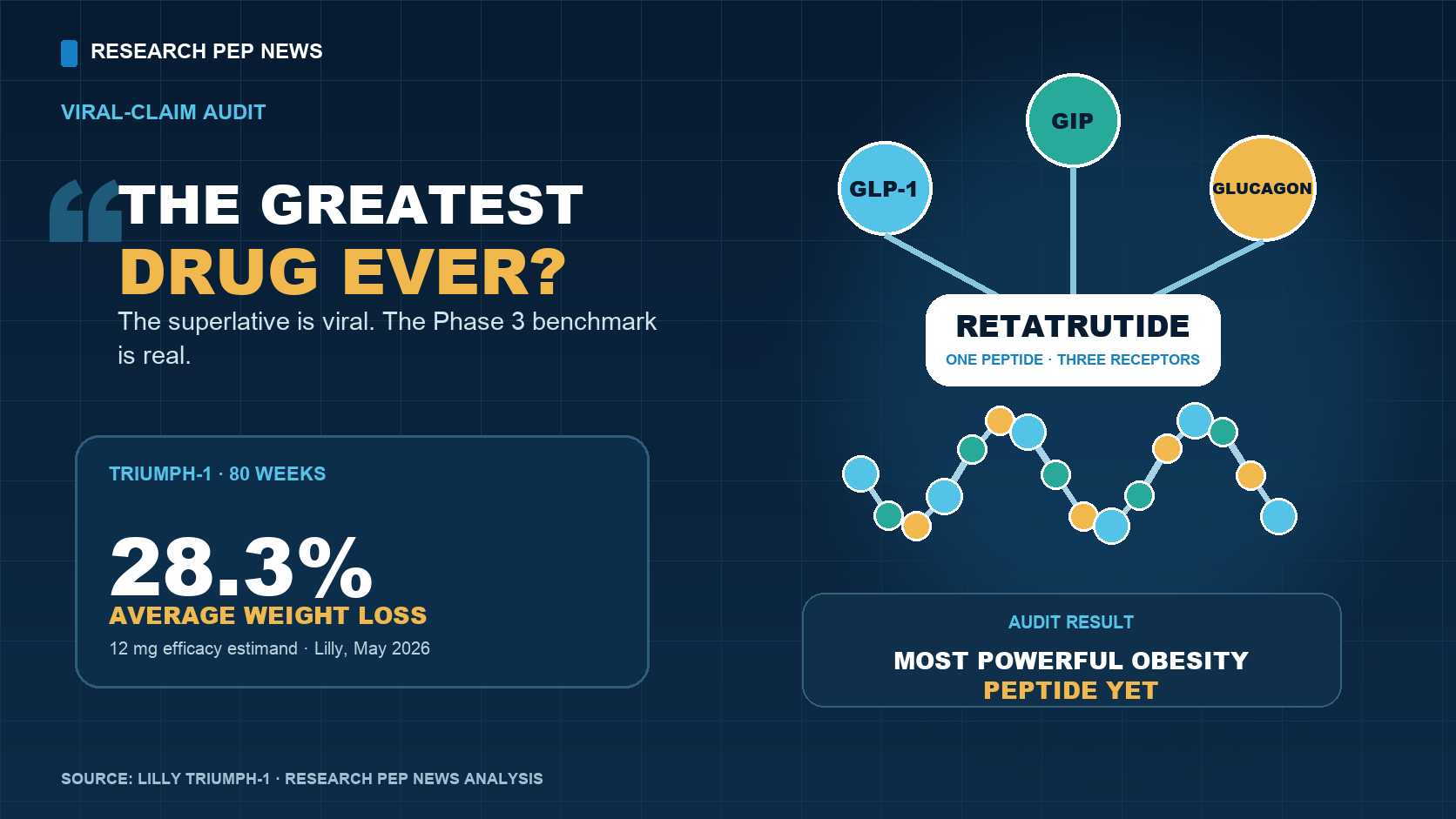
Peptide Corner’s viral superlative has a clinical center: surgery-range weight loss, major metabolic benefits and a favorable efficacy-to-tolerability signal.
KPV suppresses inflammatory pathways in human gut cells and improves two mouse-colitis models. New delivery research sharpens the human trial to run next.
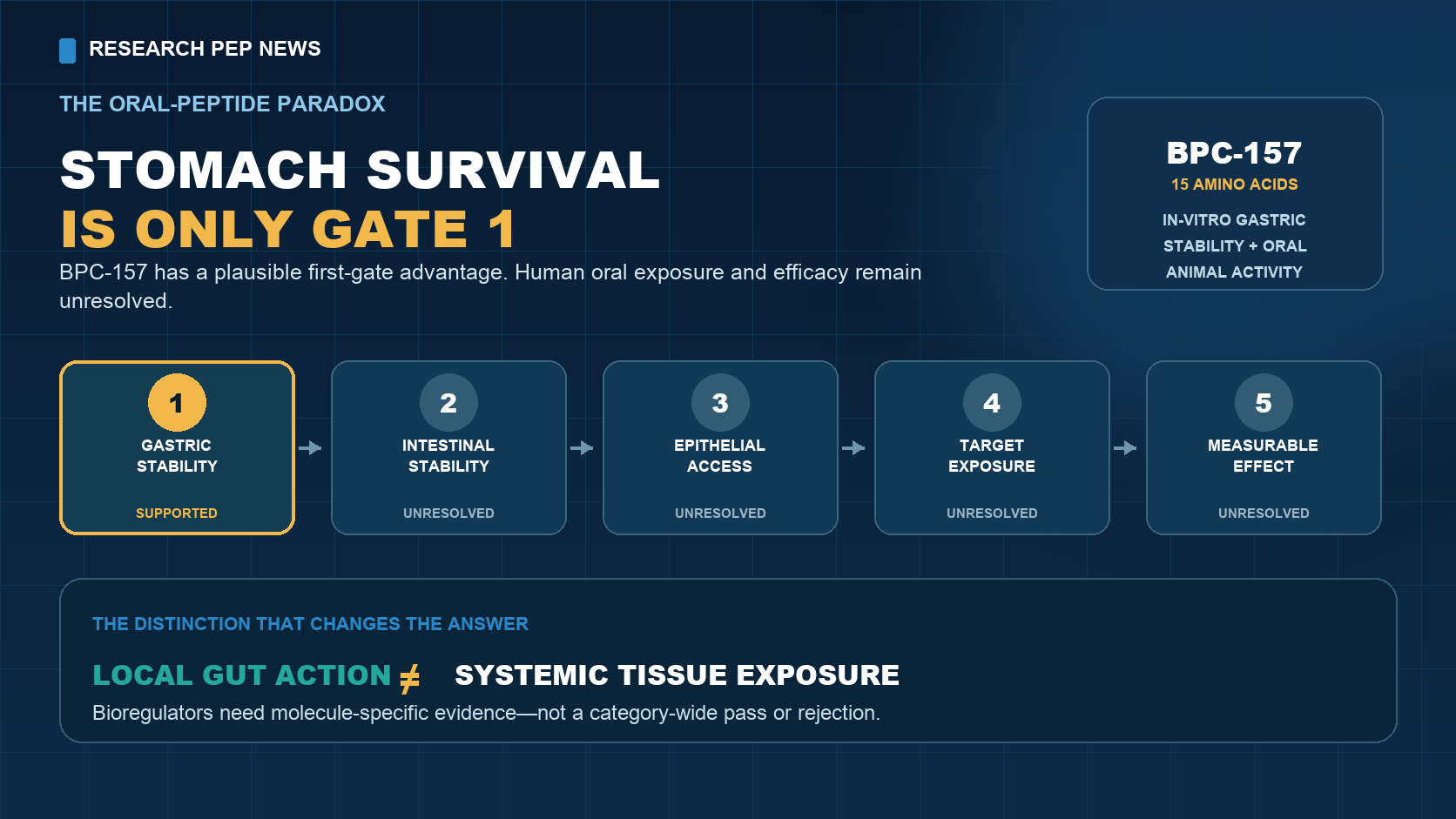
From Joe Rogan’s two-week BPC-157 story to athletes reporting restored joints, the same pattern keeps surfacing. Animal studies—including repair in aged mice—offer a reason to take it seriously.
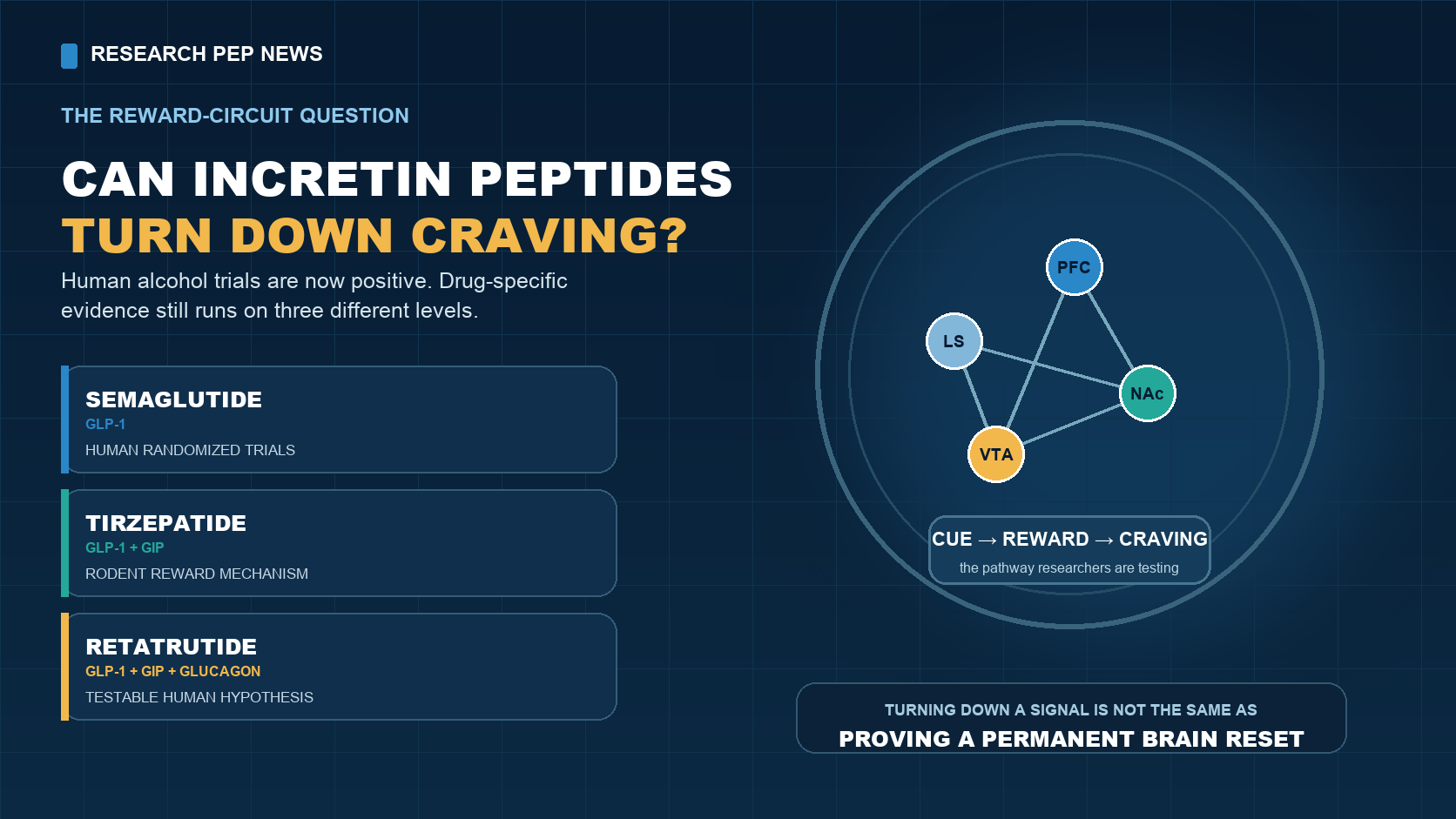
Three semaglutide trials report less heavy drinking or craving. Tirzepatide reduced alcohol reward in rodents; broader substance-use reduction looks promising and remains under study.
A flat scale or returning appetite can make dose escalation feel obvious. The evidence says to check the trend, waist, strength, adherence and side effects first.
GH-releasing peptides amplify feedback-regulated signaling instead of activating androgen receptors. Here is why they may carry less risk than steroids.
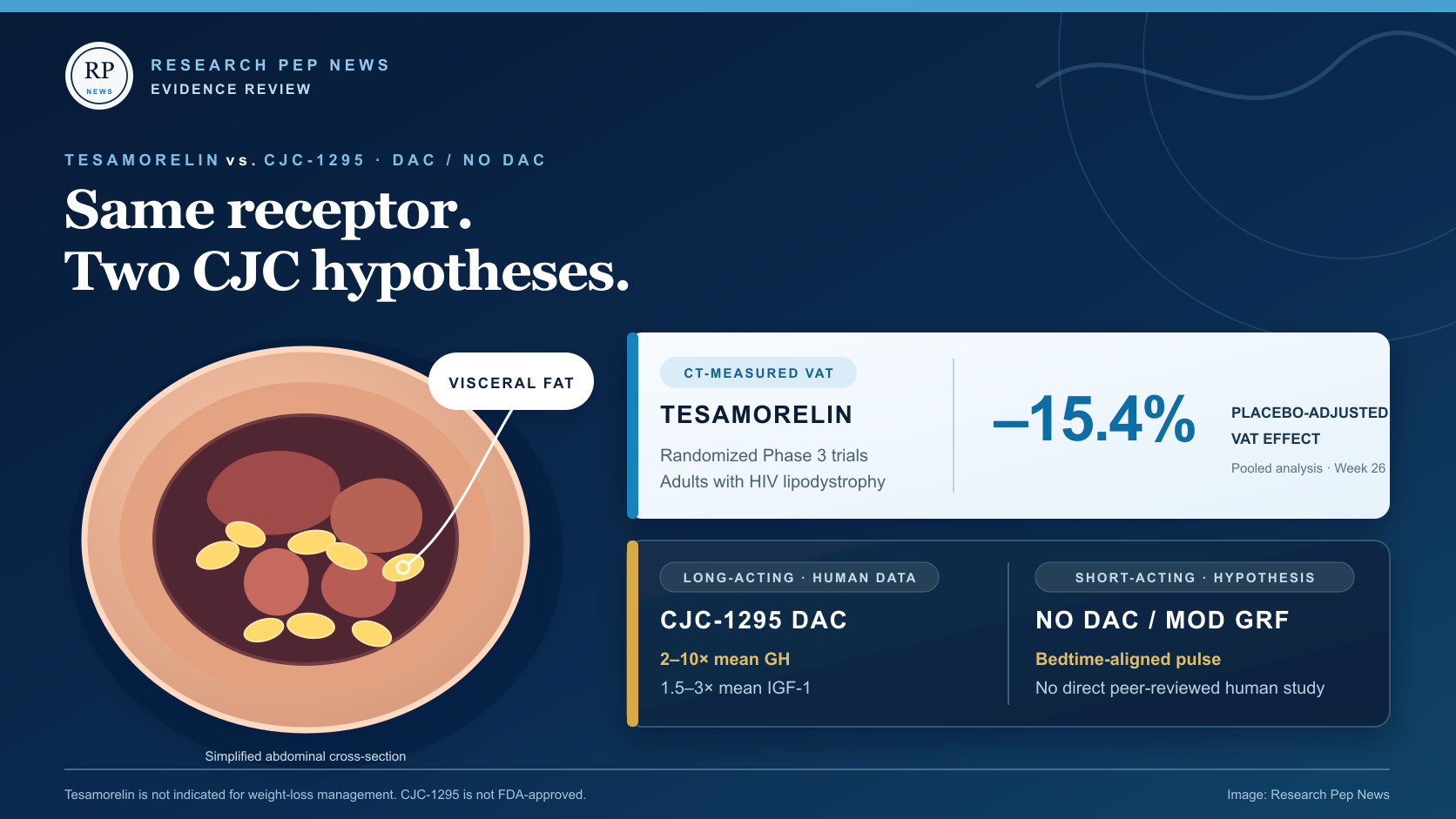
The DAC form has published human GH and IGF-1 data. The short-acting no-DAC form drives a different bedtime-pulse hypothesis. Neither has been tested against tesamorelin for visceral fat.
Rat studies link BPC-157 to nitric-oxide signaling and altered vascular tone. Human blood-pressure and drug-interaction evidence remains nearly absent.
GLP-1 and retatrutide trials show that most weight lost is fat, while lean tissue also falls. What protein, strength training and older adults need to know.
Not losing weight after four weeks on semaglutide or tirzepatide? Dose-escalation schedules and SURMOUNT-1 data explain why some GLP-1 responses arrive later.
The Journal of Peptide Science serves the European Peptide Society and publishes research spanning peptide chemistry, biology, synthesis and applications.