Across GLP-1 and retatrutide support communities, one concern is becoming harder to ignore: appetite suppression can become so strong that finishing a meal feels like work.
That can make rapid weight loss look effortless on the scale. It can also make it harder to consume enough protein, energy and micronutrients to protect the tissue that keeps a person strong and mobile.
Rapid GLP-1 weight loss is predominantly fat loss. Some lean tissue falls with it, making adequate protein and regular muscle loading part of the plan from the start.
The clearest takeaway: Keep enough protein in the diet and use muscle regularly. Track strength in the gym and in everyday life—carrying groceries, climbing stairs and lifting the household items you routinely handle.
Retatrutide raises the stakes because the weight loss can be so large
In the Phase 2 retatrutide obesity trial, adults assigned to the 12 mg dose lost an average of 24.2% of their starting weight at 48 weeks, compared with 2.1% for placebo. The weight-loss curve had not yet clearly plateaued.
That was more average weight loss in less time than the landmark trials reported for semaglutide and tirzepatide: 14.9% at 68 weeks in STEP 1 and 20.9% at 72 weeks with the highest tirzepatide dose in SURMOUNT-1. The trials were separate rather than head-to-head. The size and speed of the retatrutide result are unmistakable.
Those results help explain the intensity of the discussion. When total weight loss is unusually large, even a normal proportion of lean-tissue loss can translate into a meaningful number of pounds.
Appetite suppression is part of the mechanism people notice. It is not a signal that nutrition no longer matters. A person who is consistently unable to eat enough can lose fat quickly while also reducing the protein and training stimulus that help preserve muscle.
“Lean mass” is not the same thing as muscle
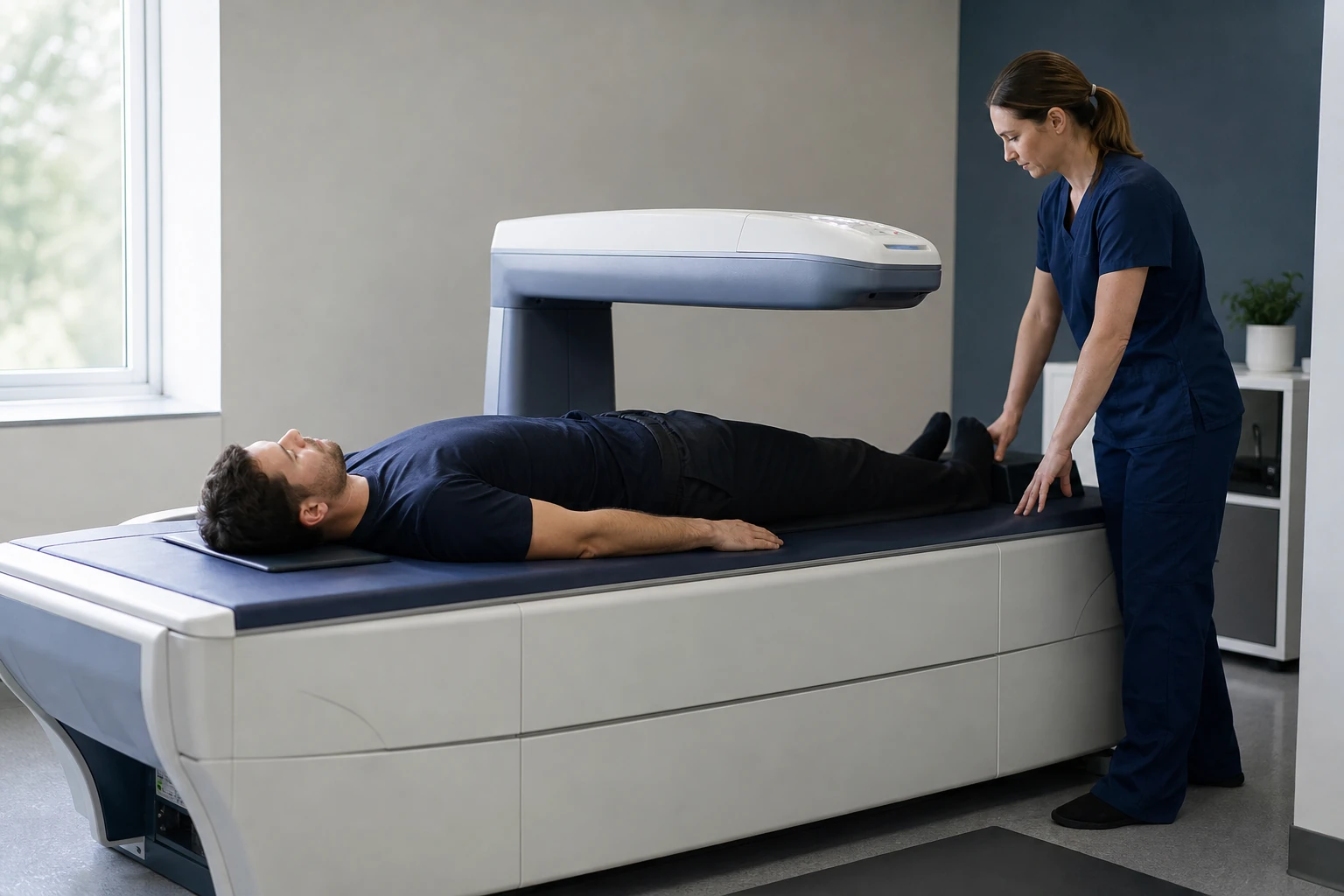
Body-composition reports often divide the body into fat mass, bone mineral and lean soft tissue. The lean category includes skeletal muscle, organs, connective tissue, body water and stored glycogen. It is not a direct measurement of muscle alone.
That distinction matters because rapid dieting can change hydration and glycogen. A DXA scan may record part of those changes as a reduction in lean mass even when the amount of contractile muscle lost is smaller.
A DXA scan shows how body compartments changed. Physical performance shows what that tissue can do. Useful markers include strength-training performance, grip strength, normal walking pace, climbing stairs, carrying groceries and lifting common household items. For people with mobility limitations, balance and the ability to rise from a chair remain valuable measures.
How the fat–lean split differed in the published studies
The published DXA estimates differ by medicine. Each comes from its own study population and time period, so the percentages describe those studies rather than a head-to-head trial.
- Semaglutide: In the 140-person STEP 1 DXA analysis, fat mass fell 19.3% and lean mass fell 9.7% over 68 weeks. Calculated from the reported kilogram changes, every 10 pounds lost included approximately 6 pounds of fat mass and 4 pounds of DXA-defined lean mass.
- Tirzepatide: In the 160-person SURMOUNT-1 DXA substudy, fat mass fell 33.9% and lean mass fell 10.9% at 72 weeks. Every 10 pounds lost included approximately 7.4 pounds of fat mass and 2.6 pounds of DXA-defined lean mass.
- Retatrutide: The 48-week obesity trial measured total weight rather than body composition. The published DXA data come from a separate 36-week Phase 2 substudy involving adults with type 2 diabetes. At 12 mg, body weight fell 16.9% and fat mass fell 23.2%. Every 10 pounds lost included approximately 6.7 pounds of fat mass and 3.3 pounds of DXA-defined lean mass. Retatrutide’s glucagon-receptor activity adds to GIP and GLP-1 signaling. This third action increases energy expenditure and promotes fatty-acid oxidation and the mobilization of stored fat.
These ratios describe the composition of the weight lost. They are not 40%, 26% or 33% reductions in a person’s entire lean-mass compartment.
The human data do not form a stepwise decline in the lean share of weight loss as receptor targets increase from one to two to three. Retatrutide’s 3.3 pounds per 10 pounds lost sits between semaglutide’s 4 pounds and tirzepatide’s 2.6 pounds. Receptor biology helps explain the drugs’ fat-loss effects. Agonist count alone does not predict lean-mass preservation.
Fat accounted for most of the weight lost with all three medicines. Adequate, individualized protein and progressive strength training remain the strongest practical strategy for minimizing avoidable muscle loss.
Why “one gram of protein per pound” is not a universal rule
The popular advice to eat one gram of protein per pound of body weight equals about 2.2 grams per kilogram. That may fit some strength athletes. It is far above the 1.2 to 1.6 grams per kilogram per day that a 2025 multi-organization advisory described as a proposed range during active weight reduction.
The calculation becomes especially unreliable when it uses current body weight for a person with substantial excess fat. At 250 pounds, the slogan produces a target of 250 grams a day—1,000 calories from protein alone. That can be impractical when appetite is low and may crowd out fiber, fluids and other nutrient-dense foods.
Researchers and clinicians may instead consider adjusted weight, goal weight or measured lean mass. The right target also changes with age, activity, total energy intake, food tolerance and health conditions. People with chronic kidney disease may need a different amount depending on kidney function and whether they receive dialysis.
The more defensible principle is simpler: include a meaningful protein source at meals and distribute intake across the day. When appetite fades later, eating protein-rich foods earlier or using smaller nutrient-dense meals may be easier than trying to catch up at night. A clinician or registered dietitian can help turn that principle into an individual target.
Protein helps most when the muscle receives a reason to stay
Protein supplies amino acids. Resistance exercise supplies the signal that the tissue is still needed.
The strongest practical evidence comes from the broader weight-loss and aging literature, because direct trials testing exact protein-and-exercise prescriptions in GLP-1 users remain limited. A joint advisory from the American College of Lifestyle Medicine, American Society for Nutrition, Obesity Medicine Association and The Obesity Society recommends pairing adequate protein with progressive resistance training during GLP-1 therapy.
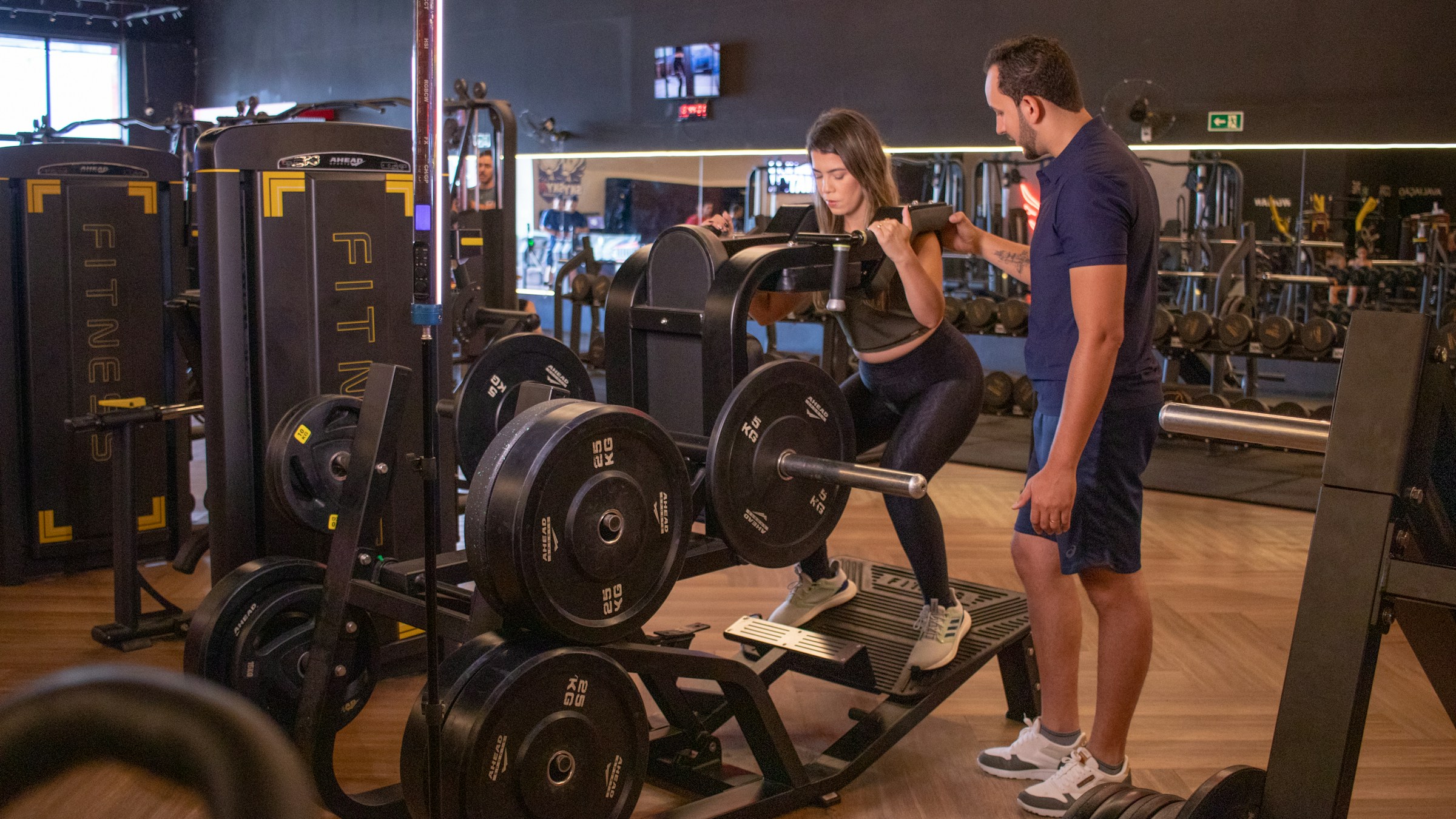
For many adults, that can mean muscle-strengthening activity at least two days per week. A bodybuilding routine is unnecessary. Chair rises, resistance bands, weight machines, free weights, loaded carries and controlled step-ups can all create a muscle-loading stimulus when matched to the person.
The useful measures are not only repetitions and weight. A stable or improving ability to rise from a chair, climb stairs, carry groceries and walk at a normal pace can show that function is being protected even during substantial weight loss.
Older adults have less reserve to lose
Age-related declines in muscle and strength make older adults particularly important in this discussion. A younger person may tolerate a modest reduction in lean tissue without noticing a functional change. For an older adult already near the threshold of frailty, the same loss can affect balance, walking and independence.
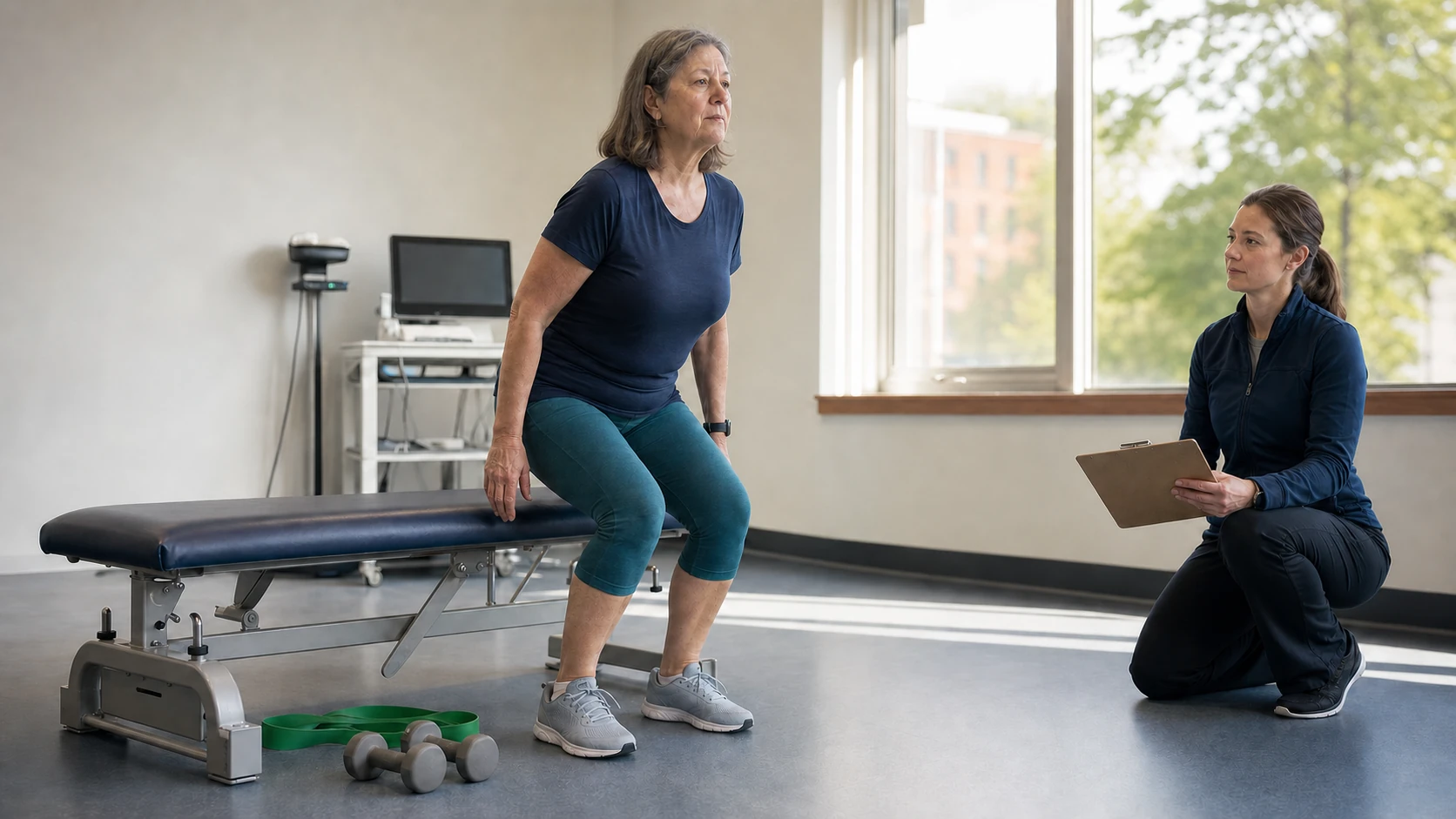
In a 2025 randomized trial of adults 60 and older with obesity and mobility limitations, both groups lost weight during a calorie deficit. The group completing supervised resistance and impact exercise showed larger improvements in gait speed, grip strength and a standard physical-performance score than a home aerobic group.
Older adults should match exercise intensity to their ability, health and available supervision. The study was supervised, and physical limitations require adaptation. Muscle loading and function can still be trained during weight loss.
For someone who cannot perform conventional gym exercises, appropriate options may include:
- Sit-to-stand practice from a stable chair.
- Seated or anchored resistance-band exercises.
- Supported movements, machines or aquatic exercise.
- Short sessions divided across the day.
- A program designed with a physical therapist or qualified adaptive-exercise professional.
The Centers for Disease Control and Prevention advises adults with chronic conditions or disabilities to be active according to their abilities and to avoid inactivity. The most useful program is one a person can perform safely, consistently and progressively.
When appetite suppression deserves a clinical review
Persistent inability to meet basic nutrition and hydration needs deserves attention.
A clinical review is reasonable when weight loss is accompanied by worsening weakness, repeated dizziness, falls, difficulty rising from a chair, a marked slowdown in walking, dehydration, persistent vomiting or an inability to eat enough over time. Those signs can justify a closer look at food intake, medications, treatment escalation, gastrointestinal symptoms and other medical causes.
Tracking only body weight can miss the change that matters most. Waist measurements and body-composition tools can add context. Strength and physical function show whether the person is keeping the capacity to live well at the lower weight.
The goal is better weight loss, not simply faster weight loss
GLP-1-based medicines have changed what is possible in obesity treatment. Retatrutide may push the size of that change even further if ongoing research supports approval.
The next phase of the science focuses on improving the quality of the loss: more fat, less avoidable lean-tissue loss and preserved strength.
The scale can report speed. It cannot report resilience.
Source record
- Phase 2 retatrutide obesity trial in The New England Journal of Medicine
- Retatrutide body-composition substudy in The Lancet Diabetes & Endocrinology
- SURMOUNT-1 tirzepatide DXA substudy
- STEP 1 semaglutide body-composition analysis
- Clinical review comparing the reported fat- and lean-mass shares
- 2025 joint advisory on nutritional priorities with GLP-1 therapy
- Review of DXA and other body-composition methods
- Randomized trial of exercise during weight loss in older adults with mobility limitations
- CDC guidance for physical activity with chronic conditions or disabilities
- National Kidney Foundation guidance on protein and chronic kidney disease
Clarification, July 30, 2026: An earlier version placed body-composition percentages from three non-comparable substudies in one visual and used the term “pooled 8 mg” without explaining that it combined two retatrutide escalation groups. The visual and text now separate retatrutide’s 48-week obesity-trial weight result from its 36-week diabetes DXA substudy and report the published fat–lean split for each medicine.
Research Pep News provides news and educational information, not individualized medical advice. Retatrutide remains investigational and is not FDA-approved.
This staff report was prepared for Research Pep News and is presented as news and educational information, not medical advice.